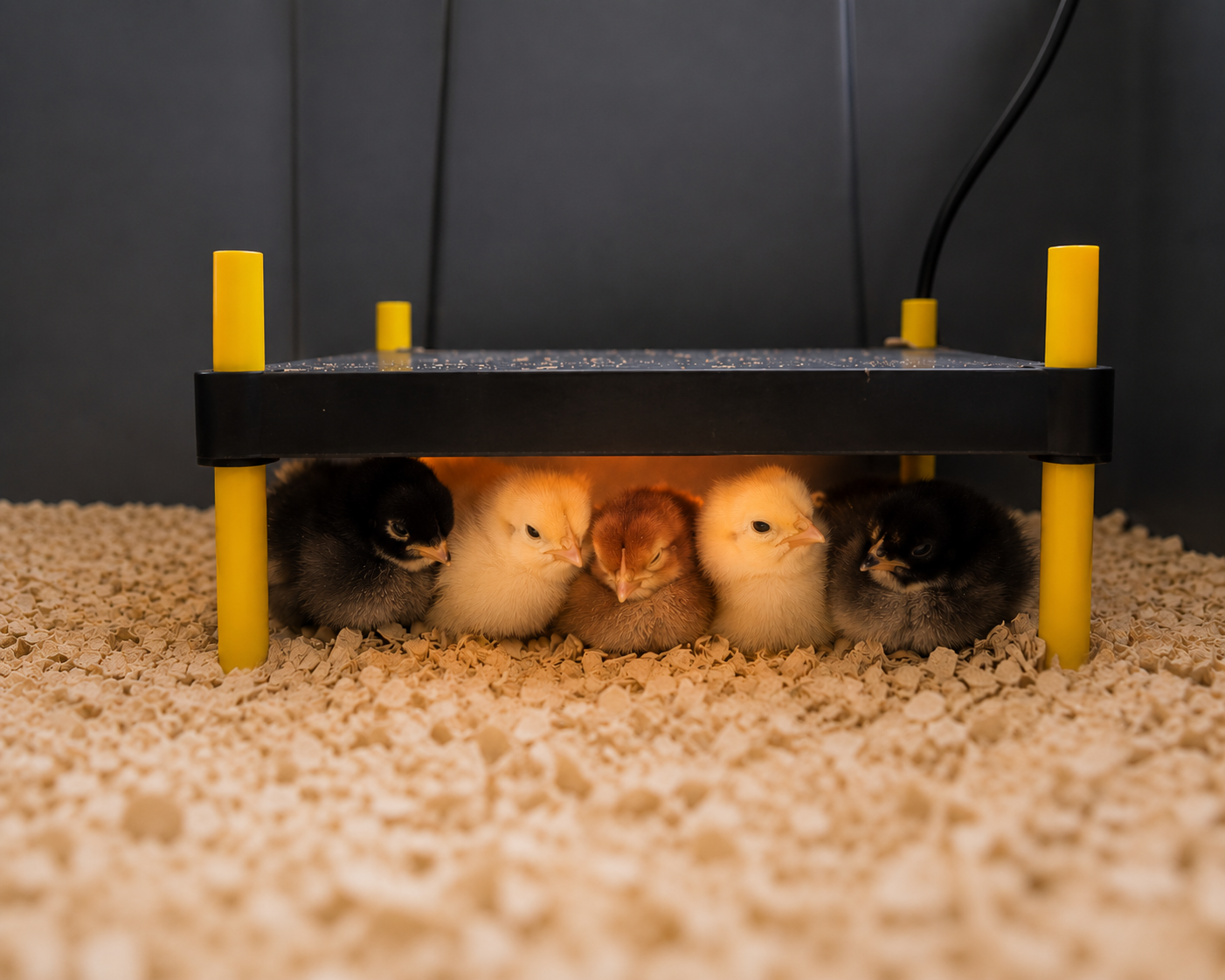
Bringing home baby chicks is exciting, but the brooder stage can also feel a little overwhelming at first.
A lot of beginners constantly worry that something is wrong, especially during the first couple of weeks. The good news is that many things chicks do are completely normal.
Once your brooder setup is warm, clean, and stable, daily care usually becomes much easier than people expect.
The First Few Days
The first few days are mostly about helping chicks settle in and adjust to their new environment.
During this stage, chicks should:
- Eat and drink regularly
- Sleep often
- Explore the brooder
- Move in and out from under the heat plate
Baby chicks sleep a lot, and it’s normal for them to suddenly stop and nap throughout the day. As long as they’re active, eating, and drinking overall, occasional resting is usually not a problem.
Choosing calm, beginner-friendly breeds can also make the brooder stage much easier, especially for first-time chicken owners. Some breeds naturally handle stress and adjustment better than others.
The Easy Coop Pick
RentACoop Adjustable Chick Brooder Heating Plate
A quality heat plate is one of the simplest upgrades you can make for a beginner brooder. This model is adjustable as chicks grow, energy efficient, and allows chicks to warm themselves naturally while avoiding many of the risks associated with traditional heat lamps. It’s a reliable option that fits The Easy Coop’s low-maintenance approach.
Keeping the Brooder Clean and Dry
One of the biggest factors in healthy chicks is keeping the brooder dry.
Wet bedding can quickly lead to:
- Strong odors
- Dirty chicks
- Bacteria growth
- Extra stress on the chicks
Most brooders do not need to be completely cleaned every day. For many beginner setups, a full cleanout about once a week is usually enough.
In between full cleanings, adding a fresh layer of pine shavings every few days helps absorb moisture and keeps the brooder smelling cleaner longer.
Clean water is also important because chicks tend to kick bedding into their water constantly.
Pasty Butt and Other Common Beginner Concerns
One common issue during the brooder stage is “pasty butt,” where droppings stick to the chick’s vent area. If it builds up, it can block the chick from going to the bathroom properly.
Checking chicks briefly each day during the first week helps catch it early if it happens.
Some other things beginners commonly notice:
- Chicks stretching awkwardly
- Sleeping suddenly
- Temporary clumsiness
- Loud chirping at times
- Rapid feather growth
A lot of this is completely normal during the early growth stage.
Signs Something May Actually Be Wrong
While many behaviors are normal, there are a few things worth paying closer attention to.
Some signs of concern include:
- Constant weakness or lethargy
- Trouble standing
- Heavy breathing
- Staying isolated continuously
- Refusing food or water
- Obvious distress under the heat source
If a chick seems weak, making sure it stays warm, hydrated, and eating is usually the first priority.
Electrolytes and Probiotics
Many beginners choose to add electrolytes or probiotics to their chicks’ water during the first few days after bringing them home. This can sometimes help reduce stress from transport and adjustment.
You do not necessarily need to use them constantly, but they can be helpful during stressful periods or if chicks seem run down.
Fresh clean water matters more than anything else.
Medicated vs Non-Medicated Feed
One thing that confuses many beginners is whether to use medicated chick starter feed. Both medicated and non-medicated feeds are commonly used, and many healthy flocks are raised successfully on either option.
Many beginners choose medicated starter because it can help protect against coccidiosis, which is a common intestinal illness in young chicks. Others prefer non-medicated feed, especially if chicks were vaccinated for coccidiosis at the hatchery or if they simply prefer a more natural approach.
No matter which option you choose, chicks should always have constant access to fresh starter feed and clean water.
It’s also best to avoid giving very young chicks treats too early. During the brooder stage, starter feed should make up the majority of their diet so they get the nutrients they need for healthy growth.
If you’re unsure about starter feed, grit, oyster shells, or when feeding needs change, you’ll find a more complete breakdown in What Do Chickens Actually Eat? (Beginner Feeding Guide).
How Long Chicks Stay in the Brooder
Most chicks stay in a brooder for around 6–8 weeks, depending on:
- Weather
- Feather development
- Nighttime temperatures
- Coop readiness
As chicks grow, they become messier, more active, and need much more space than most beginners expect.
The brooder stage goes surprisingly fast.
Final Thoughts
The baby chick stage can feel stressful at first, especially for new chicken owners. Once you realize what’s normal and focus on keeping the brooder warm, dry, and clean, daily care becomes much simpler.
You do not need a perfect setup to raise healthy chicks successfully. Consistency and simple routines usually matter much more than overcomplicating everything.
As your chicks grow, you’ll eventually start preparing them for life outside. The Teenage Stage: Moving Chicks to the Coop and Run walks through what that transition looks like.