The brooder stage goes by much faster than most beginners expect.
One minute your chicks are tiny and sleepy under the heat plate, and the next they’re jumping, flapping, making huge messes, and suddenly looking like awkward little teenage chickens.
Knowing when chicks are ready to move outside can feel confusing at first, but the transition is usually much simpler if you focus on a few basic signs.
Signs Chicks Are Outgrowing the Brooder
As chicks grow, they start needing much more space than most beginners expect.
Some common signs they’re outgrowing the brooder include:
- Constantly kicking bedding everywhere
- Jumping or flying onto the sides
- Crowding each other
- Strong odors building up faster
- Noticeably increased dust and mess
This stage usually starts around a few weeks old and happens surprisingly quickly.
For many beginners, this is when chicks start feeling much less “tiny” and much more active.
The Awkward Teenage Chicken Stage
One thing many beginners don’t expect is how awkward chicks look while growing.
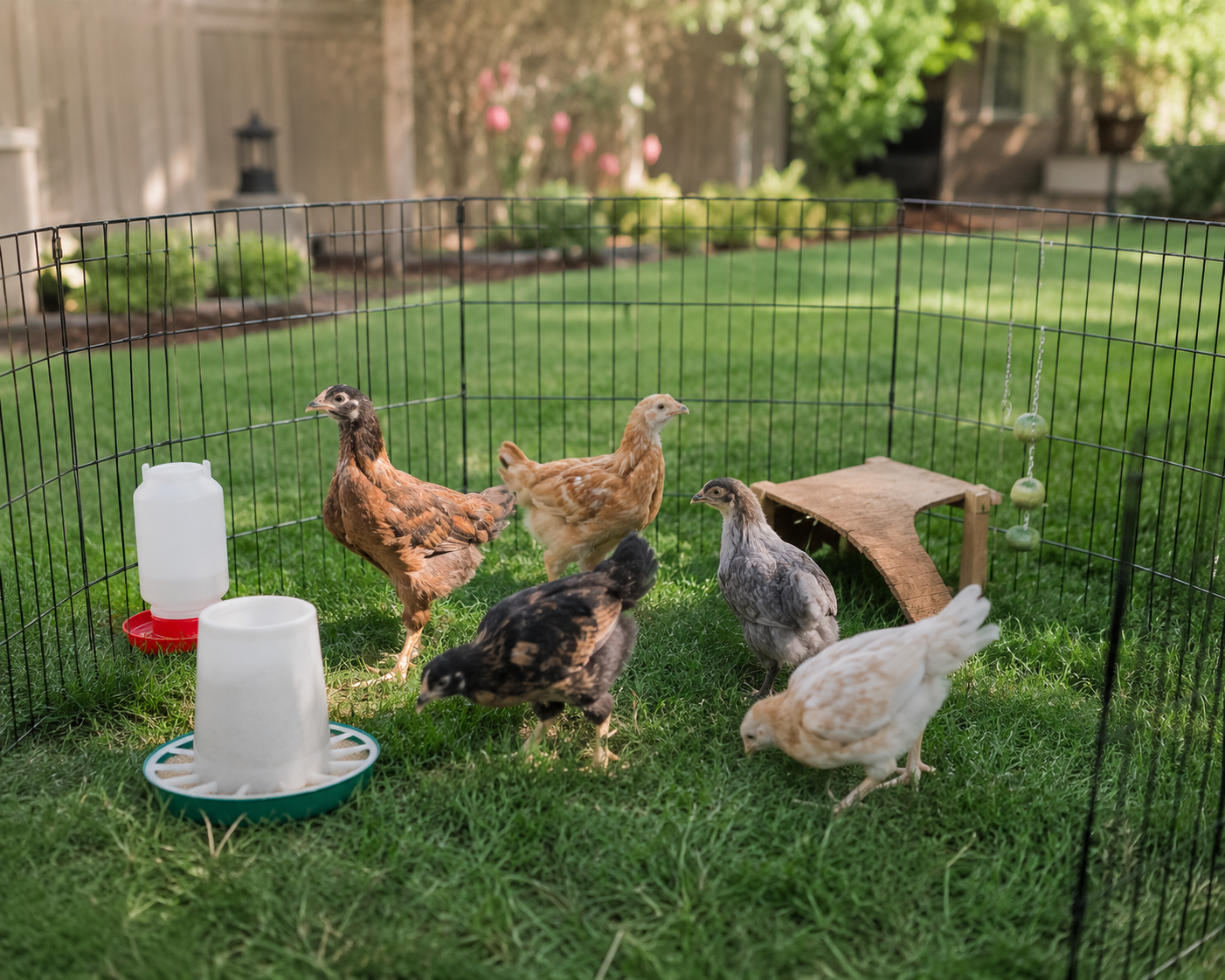
As feathers come in, chicks often go through a lanky “teenage” stage where they:
- Lose most of their fluffy appearance
- Grow uneven feathers
- Look slightly awkward or oversized
- Become much more independent and active
This phase is completely normal.
They also tend to become messier and much more curious during this stage.
When Chicks Can Start Going Outside
Many chicks can start spending short periods outside during warm weather before they fully move to the coop.
Supervised outdoor time helps them:
- Explore
- Scratch naturally
- Get fresh air
- Adjust gradually to outdoor temperatures
Many beginners use a small enclosed playpen, puppy pen, or temporary fenced area so chicks can safely explore while still being protected and easy to monitor.
Warm, sunny days with mild temperatures are usually best for first outdoor visits.
Very young chicks should not stay outside for long periods in cold, wet, or windy weather.
When Chicks Can Move to the Coop Full-Time
Most chicks are ready to move to the coop around 6–8 weeks old once they are mostly or fully feathered.
A few important things matter more than exact age:
- Feather development
- Nighttime temperatures
- Coop safety
- Proper ventilation
- Enough space
If nighttime temperatures are still very cold, some beginners wait a little longer before fully transitioning chicks outside.
A clean, dry coop with good airflow makes the transition much easier.
Before moving chicks outside, it’s important to make sure your setup is ready. Simple Chicken Coop and Run Setup for Beginners covers the basics of creating a safe and practical outdoor space.
Switching From Starter Feed
Most chicks stay on starter crumble for around the first 6–8 weeks before gradually transitioning to another feed.
Many backyard chicken owners switch to flock raiser instead of layer feed during this stage.
Flock raiser is often preferred because:
- It works well for growing chickens
- It supports mixed-age flocks better
- It avoids giving young birds too much calcium too early
Layer feed is designed specifically for actively laying hens and contains added calcium for egg production. Many chicken owners instead provide oyster shells separately once hens begin laying so birds can take extra calcium only if they need it.
For a complete feeding breakdown, see What Do Chickens Actually Eat? (Beginner Feeding Guide).
Grit and Oyster Shells
Once chickens begin eating things besides starter feed — like treats, grass, bugs, or scratch — grit becomes important because it helps them properly grind and digest food.
Many chickens naturally find small grit outdoors, but some owners also provide supplemental chick grit when needed.
Oyster shells are different from grit and are mainly used later for laying hens that need additional calcium for strong eggshells.
Young growing chickens generally do not need oyster shells yet.
Common Beginner Mistakes During the Transition
A few things that commonly make this stage harder than it needs to be:
- Moving chicks outside too early
- Overcrowding the coop
- Poor ventilation
- Introducing older chickens too quickly
- Switching feed too suddenly
Simple gradual transitions usually work best.
Final Thoughts
The transition from brooder to coop can feel intimidating at first, but chicks usually adapt surprisingly quickly once they are fully feathered and have enough space.
Most beginners are surprised by how fast chicks grow during this stage.
Keeping things simple, clean, and gradual usually makes the move to the coop much smoother for both chickens and owners.