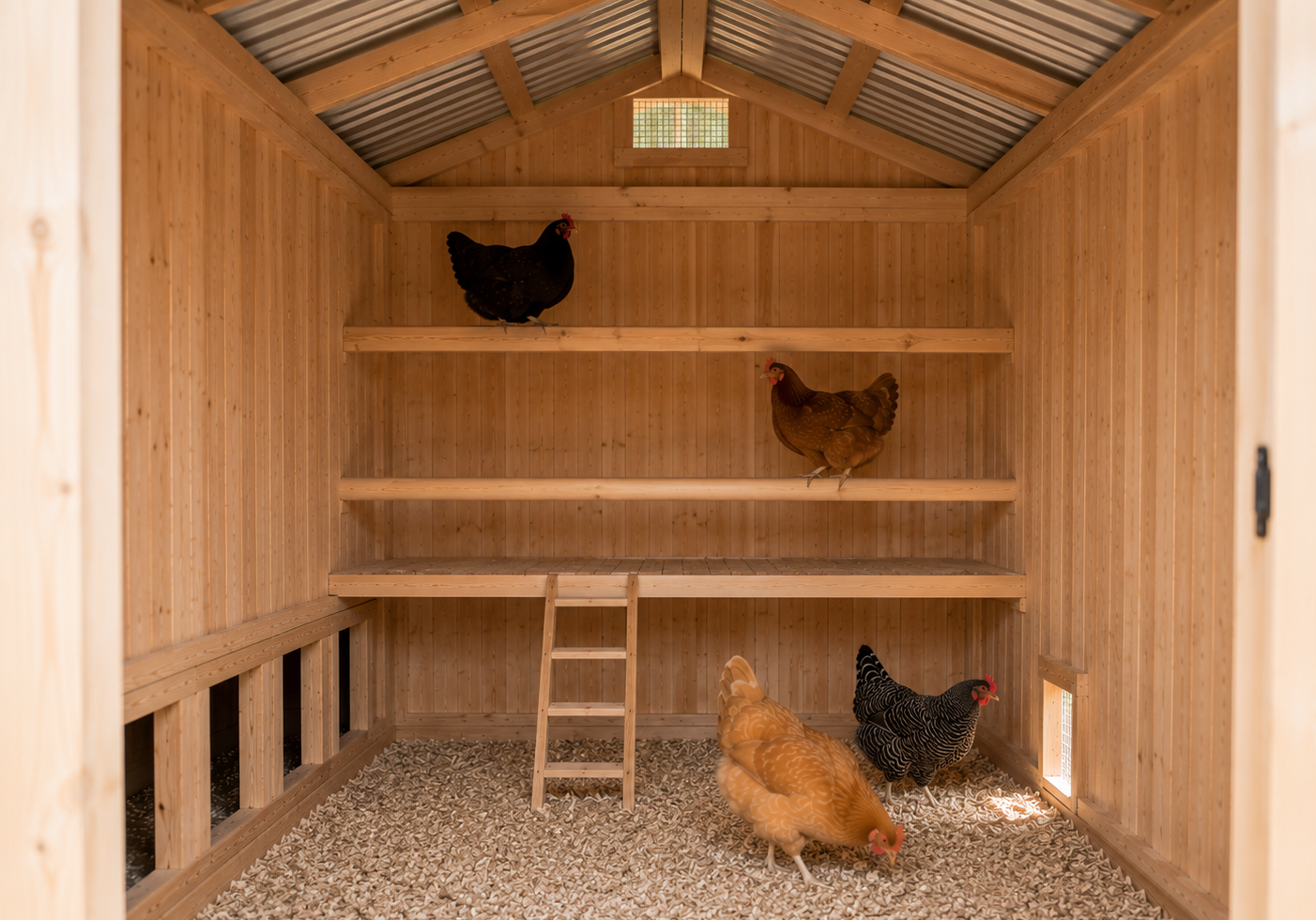
One of the biggest concerns new chicken owners have is how messy chickens are going to be.
A lot of people imagine constant cleaning, bad smells, and endless maintenance. The truth is, a well-designed coop usually requires far less cleaning than most beginners expect.
How often you need to clean really depends on:
- Your coop setup
- Your bedding
- Ventilation
- Flock size
- Weather conditions
With the right setup, keeping a chicken coop clean can actually be pretty manageable.
How Often Should You Clean a Chicken Coop?
For most backyard setups, you do not need to completely clean the coop every week.
Most people can get by with:
- Small spot-cleaning throughout the week
- Occasional bedding top-offs
- Full cleanouts every few months
A lot of low-maintenance chicken setups are designed specifically to reduce how often deep cleaning is needed.
The cleaner and more organized your setup is from the beginning, the easier everything becomes long term.
What Actually Makes a Coop Get Dirty Faster?
A few things make chicken coops harder to maintain than they need to be.
The biggest problems are usually:
- Coops that are too small
- Poor airflow
- Wet bedding
- Too many chickens in one space
- Designs that are difficult to access and clean
A well-ventilated coop with enough room stays cleaner much longer and is usually easier to manage overall.
How Much Space Helps Keep a Coop Cleaner?
Overcrowding is one of the biggest reasons coops become dirty quickly.
A good beginner rule is:
- Around 4 square feet per chicken inside the coop
- Around 10 square feet per chicken in the run
More space usually means:
- Cleaner conditions
- Better airflow
- Less stress between chickens
- Easier maintenance overall
Simple, spacious setups are usually much easier to keep clean.
Best Bedding for Easier Cleaning
Your bedding choice makes a huge difference in maintenance.
For most low-maintenance setups, about 4 to 6 inches of bedding works well. This gives the bedding enough depth to absorb moisture and stay fresher longer.
Popular low-maintenance options include:
Hemp Bedding
- Very absorbent
- Low odor
- Produces less dust
- Lasts longer than many alternatives
Pine Shavings
- Affordable
- Easy to find
- Works well for most beginner setups
Many people also use the deep litter method, where fresh bedding is added on top over time instead of constantly removing everything.
Some backyard owners use sand instead, but hemp bedding and pine shavings are often easier to manage long term, especially if moisture becomes an issue.
Easy-to-Clean Coop Features That Actually Help
A few simple design choices can dramatically reduce cleaning time.
Helpful low-maintenance features include:
- Removable roost bars
- Droppings boards under roosts
- Covered runs to reduce mud and moisture
- Walk-in coop access
- Large, well-ventilated runs
One of the easiest upgrades is a droppings board underneath the roost bars. This allows you to quickly scrape droppings instead of constantly changing bedding.
Simple setups are usually easier to maintain than complicated built-in designs.
How Much Ventilation Does a Coop Need?
Good airflow is one of the biggest factors in keeping a coop dry and low-maintenance.
Most backyard coops benefit from:
- Vent openings near the roofline
- Cross ventilation
- Airflow that allows moisture and heat to escape
Many beginners underestimate how important ventilation is for reducing smell and moisture buildup.
A dry coop is usually much easier to maintain than a damp one.
Simple Cleaning Tips
For regular coop cleaning, many chicken owners use a simple vinegar and water mixture for wiping surfaces and spot-cleaning.
You can also add fresh bedding on top throughout the week to help keep things dry and fresh between deeper cleanings.
Keeping the coop dry and ventilated is usually more important than using strong cleaning chemicals.
Does a Chicken Coop Smell Bad?
A properly maintained coop should not smell overwhelmingly bad.
Strong odors are usually a sign of:
- Moisture buildup
- Poor ventilation
- Dirty bedding
- Overcrowding
A dry, ventilated coop with quality bedding is much easier to manage than most people expect.
Final Thoughts
Chicken coops do need maintenance, but they usually don’t require constant cleaning if the setup is designed well. A simple, low-maintenance coop with good airflow, enough space, and quality bedding can stay clean surprisingly easily.
Your run setup also has a major impact on how often cleaning is needed. In many cases, a well-designed run can dramatically reduce overall maintenance, which we discuss in How to Keep a Chicken Run Clean and Low-Maintenance.
A practical coop design can make cleaning much easier from day one. If you’re still planning your setup, check out Simple Chicken Coop and Run Setup for Beginners.
Leave a Reply