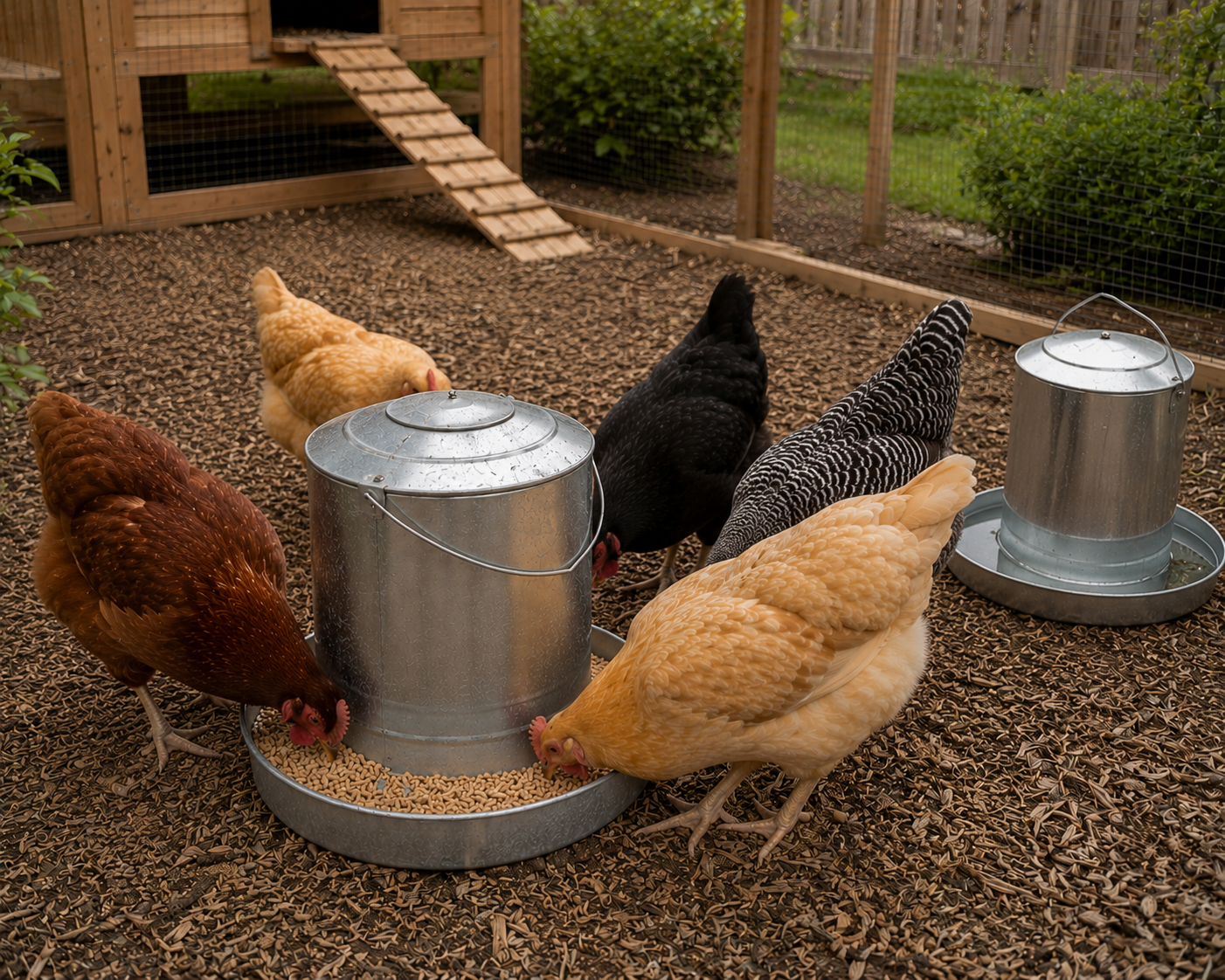
Feeding chickens sounds simple at first, until you start hearing about starter feed, flock raiser, layer feed, grit, oyster shells, treats, scraps, and supplements.
The good news is that chicken feeding is usually much easier than beginners expect. For most backyard flocks, the basics are simple: good feed, clean water, and a few age-appropriate additions along the way.
This guide covers what chickens actually eat during each stage of life and how to keep feeding simple and low maintenance.
Baby Chicks: Starter Feed
Baby chicks should start with chick starter feed, often called starter crumble. Starter feed is designed specifically for growing chicks and contains the nutrients and protein they need during early development.
During the brooder stage, chicks should always have access to:
- Fresh Starter Feed
- Clean Water
Many beginners choose medicated starter feed because it helps protect against coccidiosis, a common intestinal illness in young chicks. Others prefer non-medicated feed, especially if chicks were vaccinated at the hatchery or if they simply prefer a more natural approach.
Both are commonly used successfully.
If you want to learn more about the brooder stage and common chick concerns, check out our guide: What to Expect During the Baby Chick Brooder Stage.
Growing Chickens: Flock Raiser Feed
Around 6–8 weeks old, many chicken owners transition chicks to flock raiser feed.
Flock raiser works well because it:
- Supports Growing Chickens
- Works Well For Mixed-Age Flocks
- Avoids Too Much Calcium Too Early
Many beginners are surprised to learn that layer feed is not ideal for young chickens. Layer feed contains added calcium designed for actively laying hens, while young birds generally do not need extra calcium yet.
Adult Chickens: Layer Feed or Flock Raiser?
Once hens begin laying eggs, many chicken owners switch to layer feed, but this is one of those topics where there is more than one good option.
Layer Feed
Layer feed is designed specifically for hens producing eggs and contains added calcium to help support:
- Strong Eggshells
- Egg Production
- Nutritional Needs During Laying
For people with a flock made up entirely of laying hens, layer feed can be a simple and effective option.
Flock Raiser
Many backyard chicken owners prefer flock raiser instead, especially if they have:
- Growing Chickens And Adult Chickens Together
- Roosters In The Flock
- Birds At Different Ages
Flock raiser provides balanced nutrition without the added calcium found in layer feed. Instead of getting calcium through feed, many people who use flock raiser simply offer oyster shells separately in a small dish.
This allows laying hens to take extra calcium when needed while younger birds and roosters avoid consuming unnecessary amounts.
For many mixed backyard flocks, flock raiser plus free-choice oyster shells becomes a very simple, flexible feeding routine. The good news is that both approaches can work well, the best option usually depends on your flock setup and what feels easiest to manage long-term.
Grit vs Oyster Shells (And Why They’re Different)
This is one of the biggest beginner questions: grit and oyster shells are not the same thing.
Grit
Grit helps chickens grind and digest food. Chickens need grit once they begin eating things beyond regular feed, such as:
- Grass
- Bugs
- Treats
- Kitchen Scraps
- Scratch Grains
If chickens spend time outdoors, they may naturally find some grit on their own, though many backyard owners still choose to provide supplemental grit.
Oyster Shells
Oyster shells provide calcium and are mainly useful for laying hens that need additional calcium to support strong eggshell production.
Young growing chickens generally do not need oyster shells yet.
Can Chickens Eat Treats and Kitchen Scraps?
Yes, but moderation matters.
Many beginners are surprised to learn chickens can enjoy foods like:
- Lettuce
- Cucumbers
- Watermelon
- Berries
- Oatmeal (Occasionally)
- Mealworms
However, treats should only make up a small portion of the diet. A good quality feed should stay the foundation of what chickens eat.
Very young chicks should avoid treats too early and focus primarily on starter feed. Once chickens begin eating treats or scraps, grit becomes more important to help them digest those foods properly.
Foods Chickens Should Avoid
You do not need to memorize a giant list, but a few foods are commonly avoided, including:
- Moldy Food
- Rotten Food
- Excessively Salty Foods
- Raw Dry Beans
- Large Amounts Of Processed Junk Food
When in doubt, simple and fresh is usually best.
Clean Water Matters More Than Most People Think
One of the easiest things to overlook is water.
Chickens need constant access to clean water, and dirty waterers quickly collect:
- Bedding
- Dirt
- Droppings
- Debris
Keeping water clean often matters more than overthinking feed choices. Many beginner setups become easier once feeders and waterers are placed where they stay cleaner, easier to refill, and less likely to get kicked full of bedding or dirt.
Keep Feeding Simple
One of the biggest beginner mistakes is overcomplicating feeding.
You do not need:
- Fancy Supplements
- Complex Feeding Schedules
- Dozens Of Treats
- Constant Feed Changes
For most backyard flocks, feeding is surprisingly simple:
- Age-Appropriate Feed
- Clean Water
- Grit When Needed
- Oyster Shells For Layers
- Occasional Treats In Moderation
Simple routines are usually easier to manage and healthier long-term.
Final Thoughts
Feeding chickens is usually much simpler than beginners expect.
Once you understand the basics of starter feed, flock raiser, layer feed, grit, and oyster shells, daily feeding becomes pretty straightforward.
The goal is not perfection, it is creating an easy, consistent routine that keeps your flock healthy without overcomplicating things.
If you’re still putting together your shopping list, our guide to Beginner Chicken Supplies: What You Actually Need (And What You Don’t) can help you avoid buying things you don’t need.