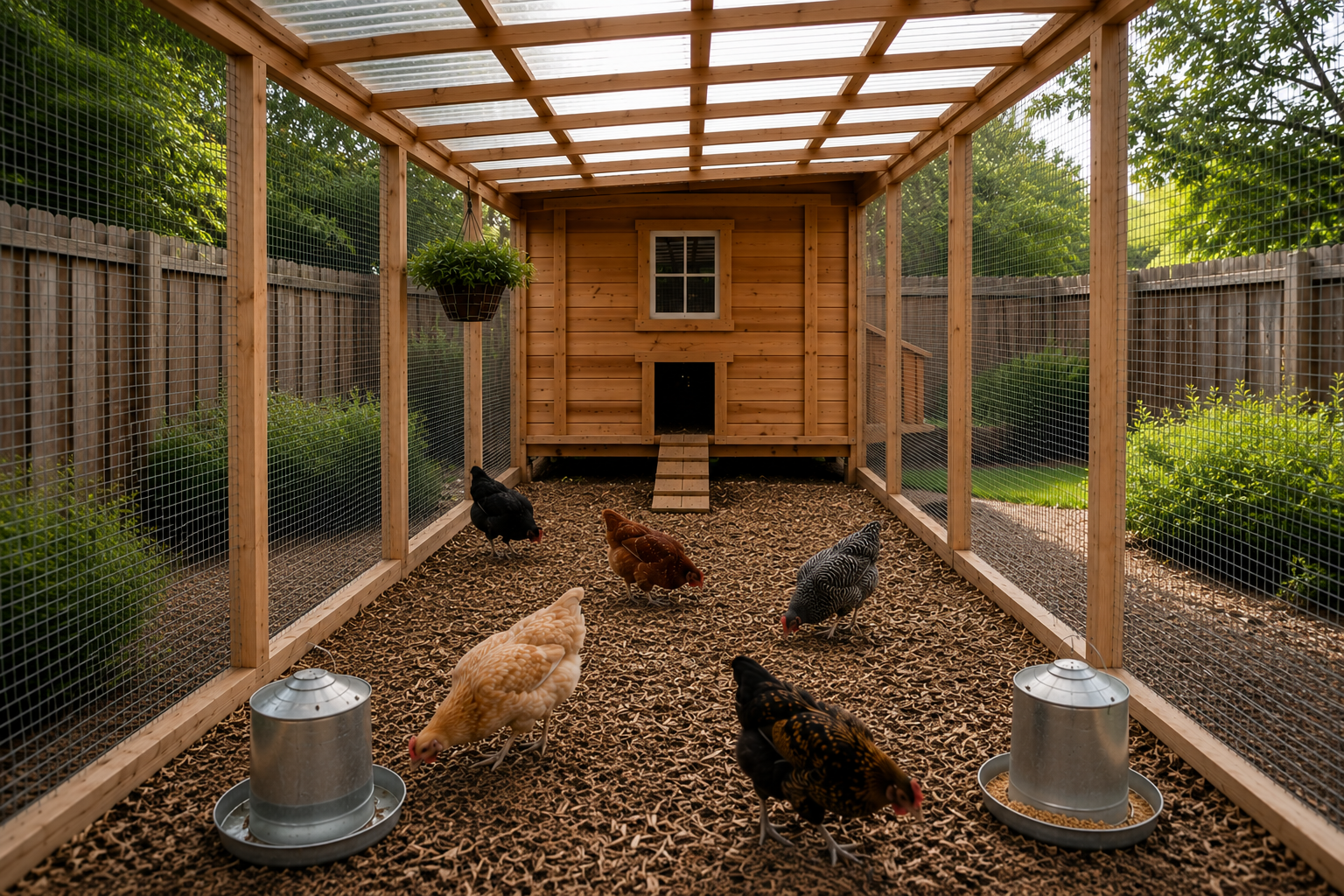
One of the biggest concerns new chicken owners have is whether their chicken run will become muddy, smelly, or difficult to maintain.
The good news is that a well-designed run is usually much easier to care for than most people expect.
A lot of chicken run problems actually come from setup issues, not the chickens themselves. When your run has enough space, stays relatively dry, and uses the right ground covering, maintenance becomes much more manageable.
This guide covers practical ways to keep a chicken run cleaner, safer, and easier to maintain long-term.
Start With Enough Space
One of the fastest ways for a chicken run to become muddy, dirty, and stressful is overcrowding.
When too many chickens share a small run:
- The Ground Gets Dirty Faster
- Odor Builds Up More Quickly
- Mud Becomes Harder To Manage
- Chickens Can Become Stressed
- Bedding Breaks Down Faster
A good beginner guideline is:
- Around 10 square feet of run space per chicken minimum
More space almost always means easier maintenance.
If you have the room, going slightly bigger than you think you need is usually worth it.
Chickens naturally scratch, dig, and destroy vegetation, so a larger run helps prevent one muddy worn-out area from forming too quickly.
Why Covered Runs Stay Cleaner
A covered run is one of the best low-maintenance upgrades you can make.
Rain and snow are major reasons chicken runs become muddy and difficult to manage.
Without protection, moisture mixes with droppings and disturbed dirt, quickly creating smell, mud, and mess.
Keeping the run covered helps:
- Reduce Mud
- Keep Bedding Dry Longer
- Lower Odor
- Reduce Cleanup
- Create A Healthier Environment
Even a simple metal or polycarbonate roof can make a huge difference.
Covered runs are especially helpful around:
- Coop entrances
- Feeders
- Waterers
- High traffic scratching areas
These spots usually become muddy first.
Why Wood Chips Are One of the Best Run Flooring Options
For beginners wanting a simple, low-maintenance setup, wood chips are usually one of the easiest options.
Compared to bare dirt, wood chips help:
- Reduce Mud
- Improve Drainage
- Control Odor
- Keep Droppings Less Noticeable
- Make The Run Cleaner And More Comfortable
Wood chips work especially well because chickens naturally scratch through them, mixing droppings into the material over time.
As the lower layers slowly break down, the material begins to naturally compost underneath while fresh material stays on top. This helps reduce smell and creates a more forgiving, easy-to-maintain surface.
For many people, wood chips are much easier to manage than constantly dealing with mud or compacted dirt.
What Kind of Wood Chips Should You Use?
Natural arborist wood chips are one of the best options if you can find them.
These are often free or inexpensive from local tree trimming companies and usually contain a mix of:
- Wood Pieces
- Bark
- Leaves
- Small Branches
That mix tends to work very well in chicken runs.
Avoid chemically treated wood or heavily dyed landscaping mulch.
Many beginners also use plain natural wood chips or coarse wood mulch from landscaping suppliers.
How Deep Should Wood Chips Be?
A good starting depth is around:
- 4–6 inches
In wetter climates or uncovered runs, some people go even deeper.
A thicker layer helps:
- Improve Drainage
- Reduce Mud
- Keep Chickens Cleaner
- Help Absorb Moisture Longer
Over time, the bottom layer naturally compresses and breaks down while the top layer stays looser.
You generally do not need to constantly replace everything.
Do You Ever Have to Remove All the Wood Chips?
Usually, no.
This surprises a lot of beginners.
For many low-maintenance setups, people simply:
- Rake Occasionally
- Add Fresh Chips On Top
- Remove Small Wet Areas If Needed
- Refresh High Traffic Spots
Over time, lower layers slowly decompose naturally.
Many chicken keepers rarely do a complete cleanout unless there is a major issue or they simply want to refresh everything.
The goal is maintenance, not perfection.
What About Sand?
Some people prefer sand, and it can work well in certain setups.
Sand is popular because:
- Droppings Can Be Scooped Easily
- It Drains Fairly Well
- It Can Look Clean And Tidy
However, for many beginners trying to create the easiest low-maintenance setup, wood chips are often simpler because they:
- Require Less Daily Scooping
- Feel More Natural For Scratching
- Stay Softer In Wet Conditions
- Help Compost Waste More Naturally
Sand also tends to feel more “maintenance active,” meaning many owners regularly scoop droppings more like a litter box.
For people wanting the simplest system possible, wood chips are often easier long-term.
Keep Water Areas From Becoming Messy
One of the messiest areas in most runs is around the waterer.
To reduce wet spots and mud:
- Keep Waterers Slightly Elevated If Possible
- Refresh Chips Around Them Regularly
- Avoid Placing Water Directly In Muddy Areas
Some people also place:
- Extra Wood Chips
- Gravel Under Chips
- Pavers Under Water Stations
to help drainage and reduce mess.
Predator Protection Still Matters
Keeping the run clean is important, but keeping chickens safe matters just as much.
Hardware cloth is one of the best materials for predator protection because it is much stronger than chicken wire.
Helpful predator-proofing basics include:
- Hardware Cloth On Run Walls
- Secure Latches
- Covered Tops
- No Large Gaps
- A Hardware Cloth Apron Around The Perimeter To Discourage Digging Predators
Chicken wire mainly helps keep chickens in.
Hardware cloth helps keep predators out.
Walk-In Runs Make Maintenance Easier
If possible, a walk-in run makes a huge difference for day-to-day care.
Being able to comfortably:
- Refill Feeders
- Rake Bedding
- Check On Chickens
- Refresh Water
- Move Around Normally
Makes maintenance much easier over time.
A setup that feels awkward to access often becomes frustrating surprisingly fast.
Keep It Simple
One of the best things beginners can do is avoid overcomplicating the setup.
You do not need:
- A Luxury Coop
- Fancy Flooring Systems
- Constant Deep Cleaning
- A Perfect Pinterest Setup
You simply want a run that is:
- Safe
- Dry
- Easy To Clean
- Comfortable For Chickens
- Easy For You To Maintain
Simple systems are almost always easier to manage long-term.
Final Thoughts
A clean chicken run is usually more about setup than constant work.
When your run has enough space, stays dry, and uses practical materials like wood chips, maintenance becomes much easier and far less stressful.
The goal is not perfection, it is creating a setup that works well for both you and your flock over time.
A well-designed coop and run work together to reduce maintenance. If you’re still planning your setup, Simple Chicken Coop and Run Setup for Beginners is a good place to start.