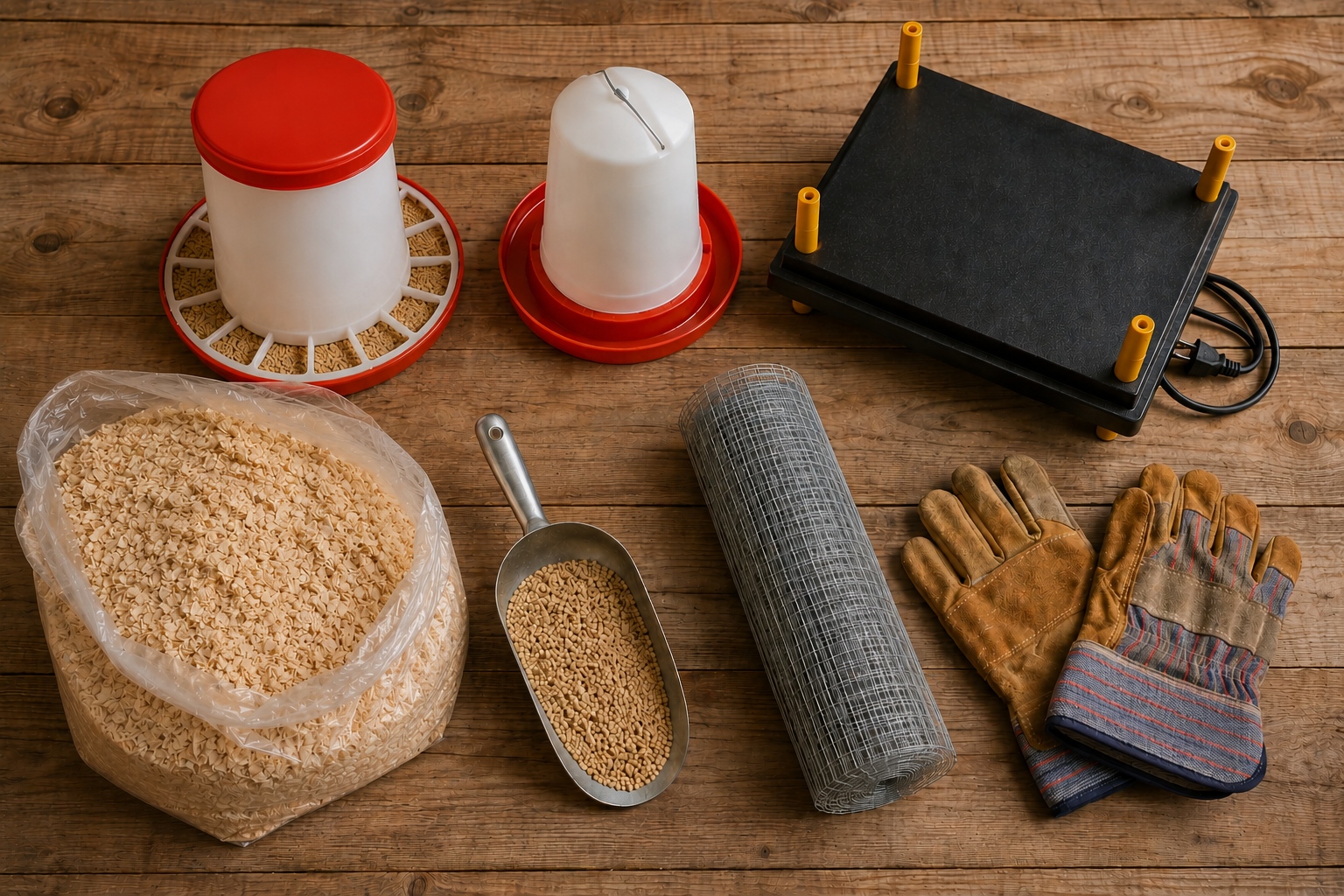
One of the fastest ways to get overwhelmed as a new chicken owner is looking at all the supplies people say you need. Spend five minutes online and you’ll find endless lists of gadgets, accessories, supplements, and expensive equipment.
The good news is that chickens are actually pretty simple. Most beginners can get started successfully with just a handful of basic supplies, and many of the products marketed toward chicken owners aren’t necessary right away.
This guide covers what you actually need, what can wait until later, and where it’s worth spending a little extra money.
Supplies You’ll Need Before Bringing Home Chicks
If you’re starting with baby chicks, you’ll need a safe brooder setup. Fortunately, the essentials are pretty straightforward:
- A Brooder Container
- A Heat Plate
- A Chick Feeder
- A Chick Waterer
- Pine Shavings Or Other Appropriate Bedding
- Starter Feed
That’s really it.
Many first-time chicken owners are surprised by how simple a brooder setup can be. A basic tote, livestock trough, or similar container works well for most small backyard flocks.
If you’d like a more detailed breakdown, check out our guide to Easy Baby Chick Setup for Beginners.
The One Thing I Recommend Not Skipping
If there is one item worth spending a little extra on, it’s a quality heat plate.
Heat plates are generally safer and easier to manage than traditional heat lamps. They allow chicks to warm themselves naturally while reducing many of the risks associated with heat lamps.
For most beginners, a heat plate is one of the simplest upgrades you can make and one that you’ll likely be glad you purchased from day one.
The Easy Coop Pick
RentACoop Adjustable Chick Brooder Heating Plate
A quality heat plate is one of the simplest upgrades you can make for a beginner brooder. This model is adjustable as chicks grow, energy efficient, and allows chicks to warm themselves naturally while avoiding many of the risks associated with traditional heat lamps. It’s a reliable option that fits The Easy Coop’s low-maintenance approach.
Supplies You’ll Need For The Coop And Run
Once your chickens move outside, the supply list stays surprisingly short. Most backyard flocks can thrive with just a few basics:
- A Safe Coop
- A Predator-Proof Run
- Feeders
- Waterers
- Bedding
- Feed
Many beginners assume they need a long list of accessories, but a well-designed coop and run will make a much bigger difference than a collection of gadgets.
A good setup often matters more than the supplies themselves. Our guide to Simple Chicken Coop and Run Setup for Beginners covers the basics.
Hardware Cloth Is Worth The Money
When building or buying a coop setup, one area worth prioritizing is predator protection.
Many experienced chicken owners recommend hardware cloth instead of standard chicken wire for securing runs and vulnerable areas. Chicken wire is designed to keep chickens in, but it does very little to stop determined predators from getting in.
Good predator protection is almost always cheaper than replacing lost birds.
Helpful Upgrades (But Not Required)
Once you’ve had chickens for a while, you may find a few upgrades make life easier. None of these are necessary when you’re first starting out, but many backyard chicken owners eventually add things like:
- Automatic Coop Doors
- Larger Feeders
- Larger Waterers
- Feed Storage Containers
- Coop Cameras
- Solar Lights Around The Run
The nice thing is that these upgrades can be added gradually over time as you learn what works best for your flock and your routine.
Supplies Most Beginners Can Skip
One of the biggest mistakes new chicken owners make is buying too much.
You probably do not need:
- Multiple Supplements
- Expensive Coop Decorations
- Fancy Toys
- Complex Feeding Systems
- Dozens Of Treats
Chickens care far more about safety, food, water, ventilation, and space than they do about expensive accessories. Keeping things simple usually makes chicken keeping easier and more enjoyable.
Focus On The Basics First
A safe coop, a predator-proof run, quality feed, clean water, and a simple feeding routine will take you much farther than a garage full of gadgets.
Many successful backyard chicken keepers use surprisingly simple setups. The goal isn’t to buy everything. The goal is to create a setup that is easy to maintain, affordable, and works well for both you and your flock.
Many of these supplies are tied directly to feeding and daily care. For a complete breakdown of feed, grit, oyster shells, and treats, see What Do Chickens Actually Eat? (Beginner Feeding Guide).
Final Thoughts
Getting started with chickens doesn’t require a huge shopping list.
Focus on the basics first, add upgrades only when they solve a real problem, and don’t feel pressured to buy every product marketed toward chicken owners.
In most cases, simple setups are easier to manage, less expensive, and just as effective as complicated ones. That’s one of the reasons backyard chickens can be much easier to care for than many beginners expect.