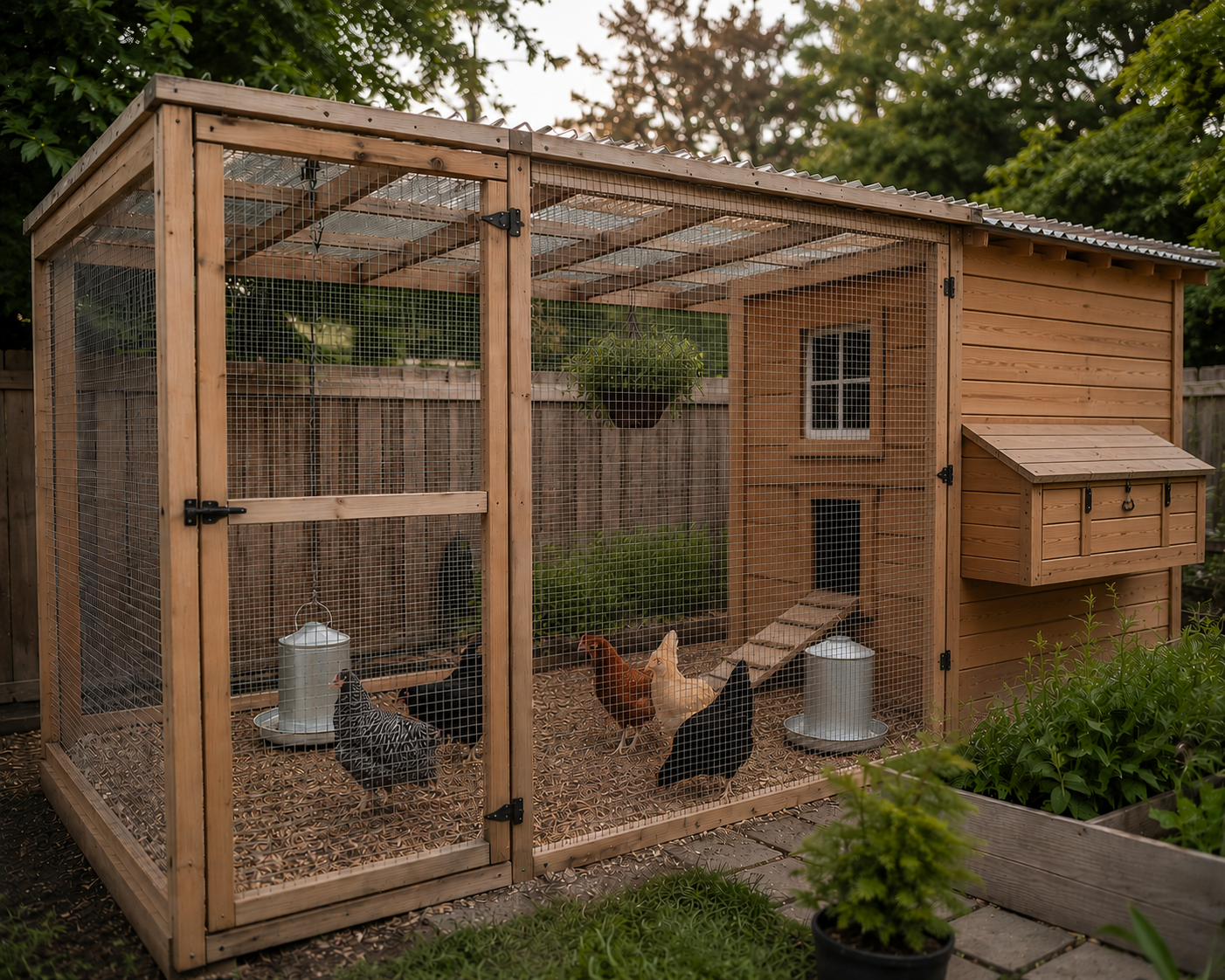
If you’re just getting started with chickens, your coop and run setup will have a bigger impact on your experience than almost anything else.
A good setup can make chicken keeping feel simple, clean, and manageable. A bad setup can turn into constant mud, mess, smell, and frustration.
The good news is that you don’t need anything fancy to create a setup that works well. In most cases, simple designs are actually easier to maintain long-term.
This guide covers the basics of creating a beginner-friendly chicken coop and run that’s practical, predator-safe, and low maintenance.
Start With Enough Space
One of the biggest mistakes beginners make is building too small.
When chickens are overcrowded:
- Bedding gets dirty faster
- Smells build up more quickly
- Chickens become stressed
- Mud and mess become harder to manage
A good rule of thumb is:
- About 4 square feet per chicken inside the coop
- Around 10 square feet per chicken in the run
More space almost always means easier maintenance.
If you have room in your budget or yard, going slightly bigger than you think you need is usually worth it.
Why Walk-In Setups Make Life Easier
If possible, choose a coop or run you can comfortably walk into.
Being able to stand up normally while cleaning, refilling feeders, collecting eggs, or checking on chickens makes a huge difference over time.
Walk-in setups are usually:
- Easier to clean
- Easier to maintain
- Easier to inspect for problems
- More enjoyable to use every day
A setup that’s awkward to access quickly becomes frustrating.
A walk-in run is usually the biggest upgrade for easy maintenance. While walk-in coops can also be helpful, many beginner backyard setups work perfectly well with a smaller coop that has large access doors for cleaning and egg collection.
Covered Runs Are One of the Best Upgrades
A fully covered run is one of the easiest ways to reduce maintenance.
Keeping rain and snow out helps:
- Prevent mud
- Keep bedding drier
- Reduce odor
- Keep the run cleaner longer
- Create a healthier environment for the chickens
Even a simple metal or polycarbonate roof can make a big difference.
Covered runs are especially helpful in rainy or snowy climates where uncovered runs can turn into mud very quickly.
The Best Ground Cover for Easy Cleaning
One of the easiest run flooring options is wood chips.
Wood chips help:
- Reduce mud
- Control odor
- Keep the run cleaner
- Make droppings less noticeable
- Improve drainage
Many chicken owners use several inches of natural wood chips and simply add fresh material on top over time as needed. Compared to bare dirt, wood chips are usually much easier to manage long-term.
If you’re looking for more details on wood chips, run maintenance, and keeping things clean long-term, check out How to Keep a Chicken Run Clean and Low-Maintenance.
Hardware Cloth vs Chicken Wire
This is one of the most important beginner topics.
Chicken wire is mainly designed to keep chickens in.
Hardware cloth is designed to help keep predators out.
For predator protection, hardware cloth is the much safer option for:
- Run walls
- Openings
- Windows
- Lower sections of the coop
Many people also add a hardware cloth apron around the outside perimeter to help discourage digging predators.
Simple Predator-Proofing Basics
You do not need to create a fortress, but there are a few things that matter a lot.
Helpful basics include:
- Secure latches on doors
- Hardware cloth instead of chicken wire
- A covered run
- No large gaps or openings
- Locking chickens safely inside the coop at night
Automatic coop doors can also make nighttime security much easier and more consistent.
Easy Cleaning Features That Actually Help
A few simple design choices can save a lot of time later.
Helpful low-maintenance features include:
- Removable roost bars for easier cleaning
- A droppings board under the roost
- Large access doors
- Good ventilation
- Enough room to move around comfortably
Ventilation is especially important because trapped moisture creates odor, damp bedding, and unhealthy air inside the coop.
Choosing Bedding for the Coop
Inside the coop, many beginners use:
- Pine shavings
- Hemp bedding
Both work well, but hemp is usually more absorbent and tends to control odor better, while pine shavings are easier to find and more affordable.
Many people use several inches of bedding and simply remove droppings or add fresh material as needed rather than constantly stripping everything out.
Keep It Simple
One of the best things you can do as a beginner is avoid overcomplicating your setup.
You do not need:
- An elaborate custom build
- Expensive gadgets everywhere
- A perfect Pinterest coop
You just need a setup that is:
- Safe
- Dry
- Easy to clean
- Comfortable for the chickens
- Easy for you to manage consistently
Simple systems are usually the easiest to maintain long-term.
A good setup becomes even easier to manage when paired with a simple cleaning routine. We cover that in How Often Do You REALLY Need to Clean a Chicken Coop?
Final Thoughts
A well-designed coop and run setup makes chicken keeping dramatically easier.
When your setup stays dry, easy to access, and simple to clean, chickens become much more enjoyable and much less overwhelming.
The goal isn’t perfection. It’s creating a practical setup that works well for both you and your flock.
If you’re still deciding which chickens to get, choosing calm, beginner-friendly breeds can also make your setup easier to manage from the start.